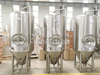
Adding insulation to brewer's fermenters is a practical and cost-effective solution to address energy consumption in the beer production process. By creating a more stable temperature, preventing condensation buildup, and reducing energy bills, breweries can produce high-quality beer while minimizing their environmental impact. As the brewing industry continues to grow, adopting energy-efficient practices will become increasingly important to maintain sustainability and reduce the industry's carbon footprint.
Fermentation commonly takes place in large, stainless steel tanks known as fermenters or fermenting vessels. These tanks are designed to provide a controlled environment, allowing the yeast to work efficiently and produce high-quality beer. However, fermenters consume a considerable amount of energy due to their size and the need to maintain a steady temperature during the fermentation process.
To address this issue, several energy-saving solutions have been proposed, including adding insulation to the fermenter's top. Insulation can help reduce heat loss from the top of the tank, thus reducing the amount of energy required to maintain the desired temperature. By adding insulation, breweries can lower their energy bills and save money in the long run.
One of the primary benefits of adding insulation to fermenters is that it helps create a more stable, uniform temperature throughout the tank. This is essential for efficient fermentation, as slight temperature variations can impact the yeast's activity and affect the final beer's quality. By reducing heat loss and preventing temperature fluctuations, breweries can produce consistent, high-quality beer batches while saving energy.
Another advantage of adding insulation to fermenters is that it reduces the amount of condensation that accumulates on the tank's exterior. Moisture buildup can lead to corrosion and other maintenance issues, ultimately resulting in higher repair costs. By insulating the top of the fermenter, breweries can prevent condensation from forming and extend the tank's lifespan.
Cassman Fermenter&BBT Configuration
No.
Net capacity
Diameter
Height
Cooling area
Remark
1
100L
660
1500
0.6
Top manway
2
200L
660
1900
0.9
Top manway
3
300L
760
2200
1.3
Top manway
4
500L
860
2500
1.9
Side manway
5
800L
1200
2600
2.4
Side manway
6
1000L
1060
2600
2.7
Side manway
7
1500L
1260
3300
3.0
Side manway
8
2000L
1360
3500
3.6
Side manway
9
2500L
1660
3300
3.9
Side manway
10
3000L
1760
3800
4.6
Side manway
11
4000L
1760
3900
6.2
Side manway
12
5000L
2160
3900
7.5
Side manway
13
10000L
2200
6000
14.3
Side manway
Previous:
Next:
For professional brewery solution and exactly quotation, please feel free to send inquiry below.